
The signal
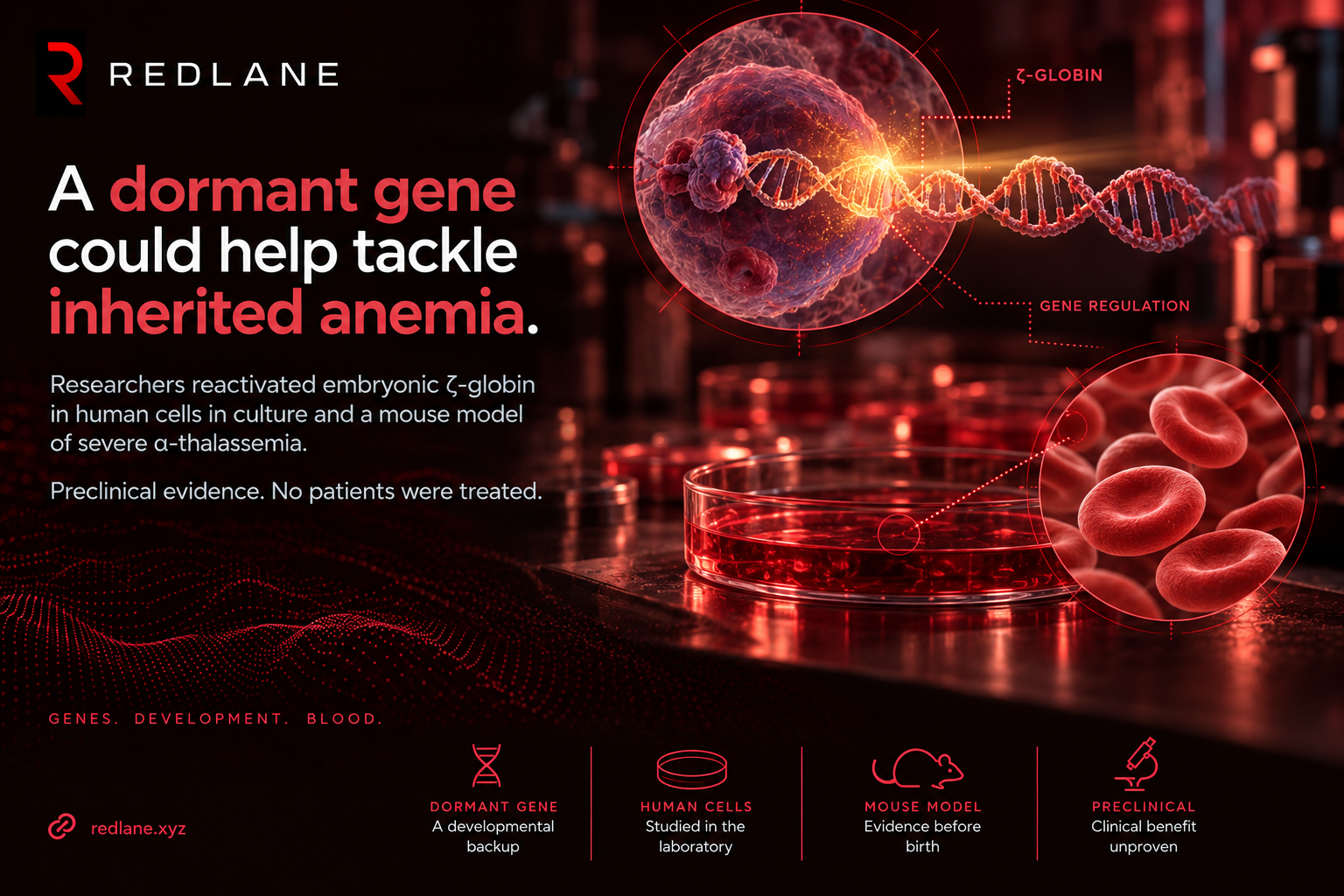
On 1 October, a Nature Genetics study reported ζ-globin reactivation in patient-derived cells grown in culture and improved blood-cell development in prenatal mouse models of severe α-thalassemia. Editing regulatory DNA let an embryonic gene compensate for deficient α-globin. These are preclinical findings: no human trial was reported; safety and lasting clinical benefit remain unproven.
Why hemoglobin matters
As MedlinePlus Genetics explains, every red blood cell carries hemoglobin, the protein that transports oxygen around the body. Alpha-globin is one of its building blocks. People normally inherit four copies of the genes that make alpha-globin, shared between HBA1 and HBA2. When copies are missing or altered, the cell may produce too little of this essential component.
That creates an imbalance in hemoglobin assembly and reduces effective oxygen delivery. Alpha-thalassemia ranges from silent carrier states to serious disease. HbH disease usually involves three affected copies; Hb Bart syndrome involves all four and can cause severe anemia before birth. The same diagnostic label therefore covers very different needs.
A gene that is still present
The rationale for reactivation begins with a useful distinction: a gene may be present in the genome yet inactive. Siyu Liu’s research profile at Oxford explains that the common Southeast Asian deletion removes adult alpha-globin genes while leaving the embryonic ζ-globin gene, HBZ, available. The research question becomes how to make that remaining gene active in later blood cells, where it is normally silent.
This idea has a history. In 2021, King and colleagues showed that the ζ-globin gene becomes enclosed in a locally repressive chromatin environment in adult erythroid cells. Chromatin is the packaging that helps control access to DNA. In that state, the gene no longer contacts the regulatory enhancers that help activate it. The team could partially reactivate expression by changing that packaging. The finding made gene regulation itself a possible route to recovering a lost function. An intact DNA sequence and an active biological program are different things.
Existing care still matters
Current care reflects the severity of the disorder. GeneReviews describes prenatal and continuing postnatal transfusions for Hb Bart syndrome, with donor stem-cell transplantation offering a potentially curative option for suitable patients. Many people with HbH disease need no ongoing treatment, while more severe forms may require transfusions. Iron overload needs attention too, including in people who are not regularly transfused. A future intervention would have to improve outcomes within this varied clinical landscape.
REDLANE perspective
For REDLANE, the next question is whether a biological workaround can become dependable care. We would look for evidence that edited blood-forming cells remain functional over time, produce hemoglobin that delivers oxygen effectively, and offer a worthwhile balance of benefit, risk and treatment burden. Those questions define what future research needs to establish.
There is a broader lesson for reading innovation: recovering activity in a cell is one milestone. Showing that people benefit over the long term requires a separate body of evidence.