
The signal
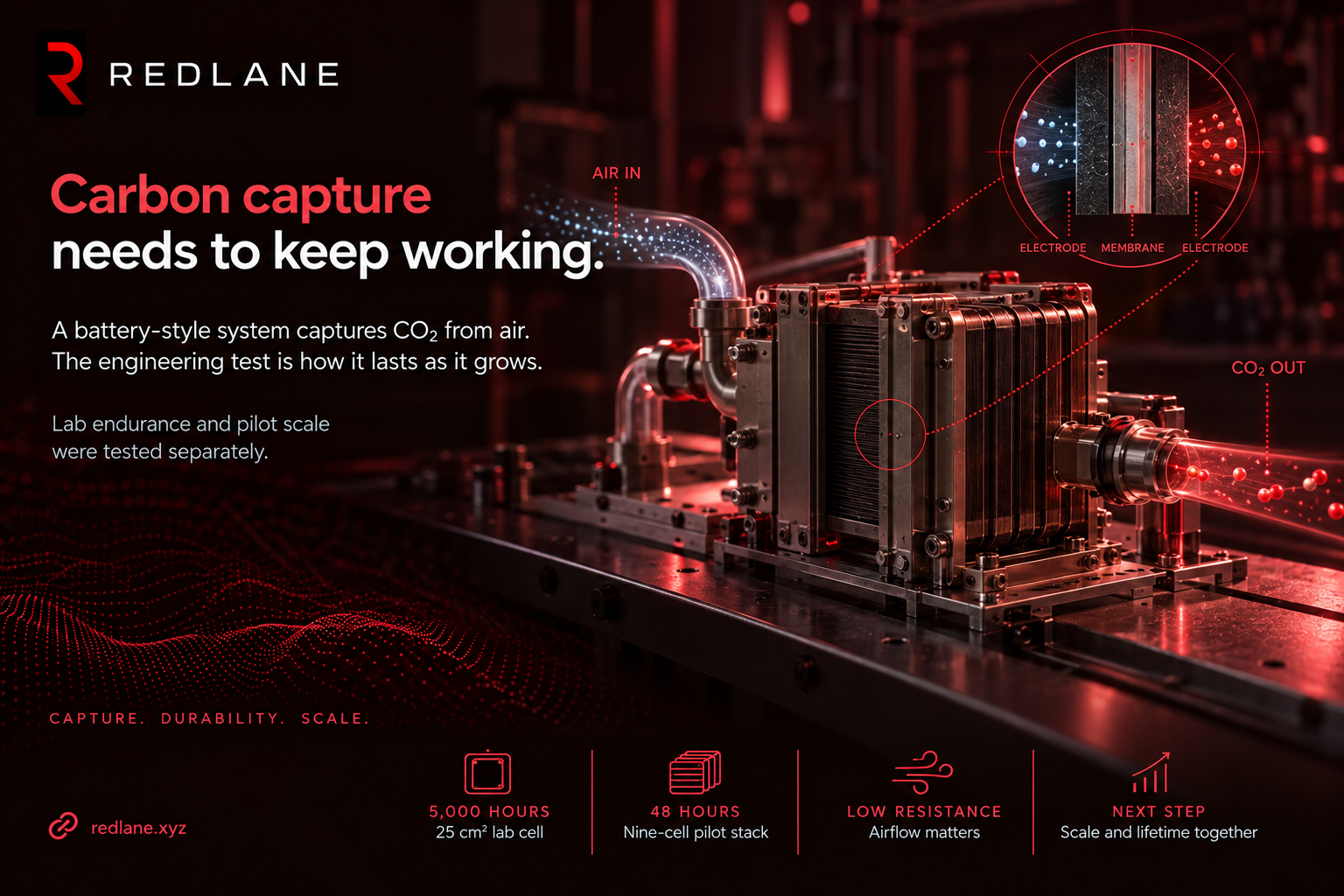
On 22 September, a Nature Energy study reported two separate tests: a 25 cm² cell operated for 5,000 hours, while a stack of nine 300 cm² cells ran for 48 hours. The stack used 0.83 MWh per tonne of CO₂ for capture and purified release.
The supplement states that this energy figure includes regeneration but excludes air blowers and CO₂ compression. The projected capture cost below US$100 per tonne comes from a model, not commercial operation.
Why air capture uses energy
Direct air capture separates CO₂ from ordinary air. That is a demanding starting point: the gas is far more dilute than in a power station’s exhaust. The IEA explains that this difference raises the energy needed for separation. Established capture approaches use heat and electricity to recover CO₂ and prepare their capture material for another cycle. Energy demand therefore affects both operating costs and the practical locations where equipment can run.
This study explores an electrical route. In Versogen’s account, a membrane sits between matching nickel-hydroxide electrodes, using chemistry familiar from rechargeable batteries. An applied current creates different chemical conditions on the two sides: one takes up CO₂, the other releases it. That offers a route away from heat-driven regeneration. Versogen supplies the membrane, so its explanation is a participating company’s account.
A complete carbon chain
Capturing a concentrated stream is one stage in a longer chain. The IEA describes compression and transport when captured CO₂ moves to another site, followed by either use or storage. Those steps need equipment, energy and infrastructure of their own.
For durable carbon removal, the destination matters. As the IPCC explains, removal requires taking CO₂ from the atmosphere and storing it durably. A capture result alone cannot establish that outcome. That makes the storage decision part of the climate case from the outset.
REDLANE perspective
REDLANE reads this as progress toward testing an engineering system under more relevant conditions. Our next questions concern the complete installation: can larger equipment maintain its performance over long periods, across changes in temperature, humidity and air quality? How often must components be replaced, and how does maintenance affect availability?
We would also look for reporting that puts capture, air handling and compression inside the same energy boundary. Comparisons become more useful when they describe the same work. A credible cost case then needs manufacturing, financing, electricity and maintenance assumptions that can be checked against operation.
The useful connection to our earlier Signal on air-derived aviation fuel is the system around the chemistry. Captured carbon needs a destination; a promising device needs dependable infrastructure. Following those connections helps turn a striking laboratory result into a practical question about what can be built and operated.